

A lesson in visionary creativity
From a visit to the Jules Verne house-museum

Earlier this summer I was on vacation in France and Germany. We designed the trip to be a tour of major gothic cathedrals, with lots of art and history. Stained glass at Chartres, Monet’s garden in Givenry and the cathedral he painted many times in Rouen, the mixing of old and new in Cologne. My kind of vacation.
One of the stops on our journey was Amiens, a city in the Somme River Valley. It got on our list for its cathedral (more than double in size than the Notre Dame in Paris!), but the most memorable was the visit to the house of Jules Verne.
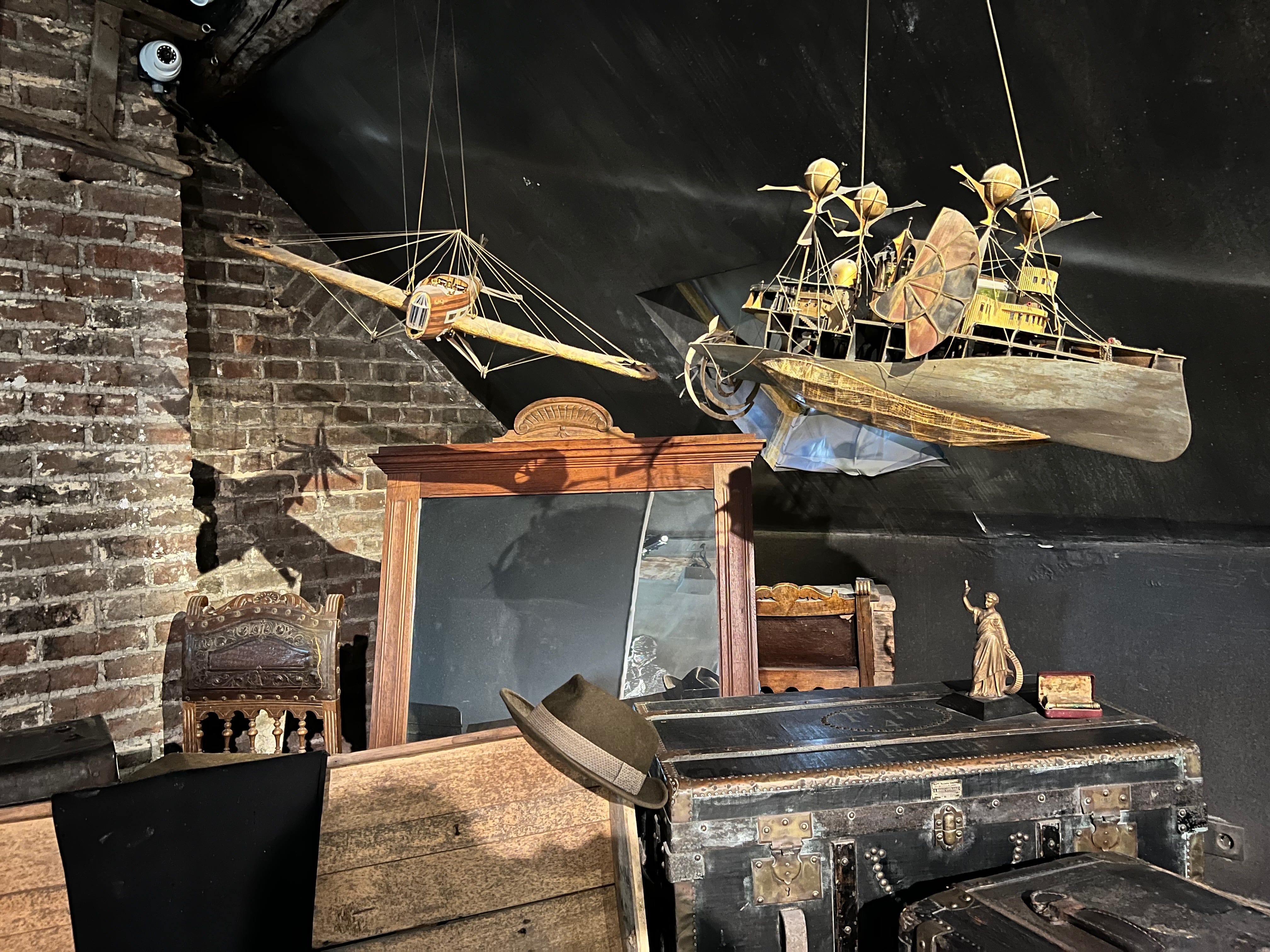
My son read many of his books in middle school and is a big fan. We were going to visit the house to give him a break from all the churches all the time. I read Twenty Thousand Leagues Under the Sea in 7th grade, but I read it because it was required and not because I wanted to. So, I was not primed to be personally excited about this house museum.
But creativity (including learning about creativity) is about broad interests and surprises.
What I knew about Jules Verne can fit in a few bullet points. He was one of the great 19th century writers who published in serialized magazines. He is monumentally popular, the third most translated author in the world, after Agatha Christie and Shakespeare. And I knew that he was the father of science fiction, having anticipated travel to the Moon and submarines and flying machines. Plus some I did not know he anticipated, like holograms and video conferencing.
We tend to take ‘father of’ to mean that the individual in question envisioned pieces of the future in his vast imagination. Because genius.
But I have written here about creativity being social.
The truth is that even when we take the message of creativity being social to heart, we need to remind ourselves of it. I certainly know creativity is social, but was surprised to learn that the father of science fiction might not have been without the influence of his editor and publisher.
Jules Verne did not start writing what we now consider science fiction. He made his literary debut with a stage comedy, followed by a historical adventure and a travel story.
Only when he started working with Pierre-Jules Hetzel who also published literary greats such as Honoré de Balzac, Victor Hugo, and Émile Zola, did Jules Verne venture into themes he is some 150+ years later famous for. Hetzel founded an educational magazine for young readers with a goal of bringing together scientists, authors, and illustrators to both educate and entertain. He saw potential in Verne and his meticulously researched narrative of far away places, their nature, and history, and offered him a long-term contract. He would publish Verne’s novels serialized in the magazine and they would appear in bound book form toward the end of the year (in time to be gifted for Christmas).
Hetzel encouraged Verne to think big and steered him into exploring scientific and technological developments. Thanks to the correspondence between the two men, we can see how much the publisher influenced the writer. Without this relationship, it is possible that Verne would have continued his career in finance and theater, but not become a prolific novelist.
If he met a different publisher, perhaps he would have still become a novelist, but continued to write about travel, exploration, and history.
The observation that the genius of Jules Verne emerged in relationship with another great creator does not diminish his accomplishments. He wrote wildly popular books that captured the imagination of children and adults alike for a long time. But he did not think of it all on his own. That is how creativity works.
There is comfort in this realization. We do not have to sit in front of our computers and expect to solve all the problems and envision all the visions on our own. A great like Jules Verne did not. The rest of us will not either. It does help to be open to making connections and considering new perspectives and directions.